

China’s Spring Festival, the most important cultural holiday of the year, brings significant shifts to business operations, consumer behavior, and workforce dynamics in 2026—the Lunar Year of the Horse. For foreign companies operating in or with China, failing to prepare for this period can lead to supply chain delays, lost revenue, or misaligned brand messaging. This comprehensive guide outlines actionable strategies to turn the 2026 Spring Festival into an opportunity for resilience, growth, and cultural connection.
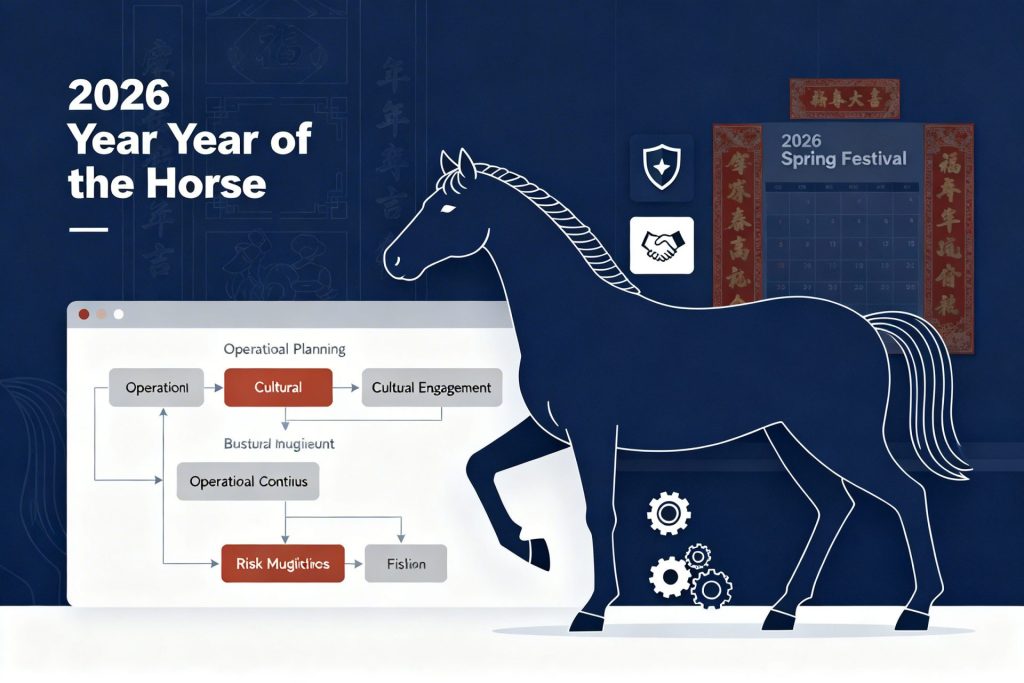
Plan Operational Continuity to Avoid Disruptions During the 2026 Spring Festival
Proactive operational planning is the foundation of maintaining business stability during the 2026 Year of the Horse Spring Festival. Unlike Western holidays, China’s Spring Festival often extends beyond the official 7-day public holiday, with many manufacturing, logistics, and retail businesses shutting down 3–5 days early and resuming operations 1–2 weeks later due to employee travel and family reunions.
| Industry | Typical Holiday Duration (Including Extended Closures) | Peak Resumption Time |
|---|---|---|
| Manufacturing & Logistics | 10–14 days | 1–2 weeks after official holiday ends |
| Retail & E-commerce | 7–10 days | 3–5 days after official holiday ends |
| Professional Services (Legal/Accounting) | 7 days | First business day after official holiday ends |
To mitigate disruptions, foreign companies should negotiate backup supply agreements with local vendors 2–3 months in advance and cross-train teams to cover critical roles. Beyond operational planning, foreign companies can turn the 2026 Year of the Horse into a brand-building opportunity by aligning with Chinese cultural traditions.
China’s Spring Festival—the Lunar Year of the Horse. to Boost Brand Relevance
The 2026 Lunar Year of the Horse carries rich cultural symbolism—horses represent vitality, speed, and perseverance in Chinese culture—offering foreign companies a unique chance to connect with consumers on an emotional level. Brands that integrate these themes into their marketing campaigns see higher engagement and loyalty compared to generic holiday promotions.
The Spring Festival period brings unique risks, including increased travel-related accidents, supply chain bottlenecks, and potential security vulnerabilities for empty office spaces. Foreign companies must develop tailored protocols to address these challenges.
According to guidance from the Ministry of Foreign Affairs of the People’s Republic of China, foreign employees should avoid high-risk areas, secure personal belongings, and register their travel plans with the company’s HR department. For supply chains, companies should conduct inventory checks 1 month before the holiday and prioritize shipping critical materials 2 weeks in advance to avoid last-minute delays. Additionally, implementing remote monitoring systems for office facilities can reduce the risk of theft or damage during extended closures. Equally important as risk management is fostering positive employee relations, which directly impacts post-festival productivity.
Strengthen Employee Relations with Spring Festival-Friendly Policies
Chinese employees value Spring Festival as a time to reunite with family, so foreign companies that offer flexible, culturally sensitive policies will stand out as desirable employers and boost post-holiday morale. Adapting local practices while maintaining global standards creates a balanced approach that benefits both employees and the business.
| Benefit Type | Foreign Companies (Recommended Practices) | Local Chinese Companies (Common Practices) |
|---|---|---|
| Holiday Leave | 7 official days + 2 optional paid days for travel arrangements | 7 official days + 3–5 unpaid extended days |
| Year-End Bonus | 1–2 months’ salary (performance-based + festival bonus) | 2–3 months’ salary (fixed + performance + red envelope) |
| Festival Gifts | Customized gifts combining global brand elements with horse-themed cultural touches | Red envelopes, local specialty food baskets |
Small gestures, such as providing travel stipends or hosting a pre-festival team dinner, can also strengthen team cohesion and show respect for Chinese cultural values. By combining operational foresight, cultural sensitivity, risk preparedness, and employee-centric policies, foreign companies can thrive during the 2026 Year of the Horse Spring Festival.
The Year of the Horse Begins: Understanding China’s Spring Festival and Its Impact on Your IP Registration
The Chinese New Year—the Year of the Horse—has officially concluded, marking not just the end of a holiday, but a profound new beginning for Chinese people and businesses alike. For us, the Spring Festival represents the start of a new cycle of energy, prosperity, and renewed focus.
However, for our international clients navigating the Chinese market, this period can sometimes bring a unique set of questions, particularly regarding timelines.
The Great Annual Pause: It is essential for foreign enterprises and individuals to understand that the Spring Festival is the largest and most important traditional festival in China. Unlike typical public holidays in the West, the Chinese New Year prompts a nationwide pause. During this time, almost all enterprises, logistics networks, and official government institutions close their doors to allow citizens to return to their hometowns and celebrate with their families.
The Year of the Horse: What This Means for Trademarks, Copyrights, and Patents
If you are a foreign entity registering intellectual property in China—whether it is a trademark, a copyright, or a patent—your timeline will naturally be affected by this holiday. The China National Intellectual Property Administration (CNIPA) and all related official bureaus completely halt their operations and review processes during the festival.
Because our legal and administrative systems take a full break, the standard processing times (such as the typical 14-working-day wait for initial filing procedures) are paused and only resume once the official holiday concludes.
At GWBMA, we work closely with Western clients every day, and we understand that a complete nationwide shutdown might contrast with Western business rhythms, where skeleton crews often keep things moving during holidays. We kindly ask for your understanding and patience during this specific time of the year. The pause in our services and official registrations is not a delay in our commitment to you, but simply a reflection of China’s most deeply rooted cultural tradition.
Good luck in the Year of the Horse (”马年大吉”)
The 2026 Lunar Year of the Horse Spring Festival is more than a holiday—it’s a test of a foreign company’s adaptability and cultural intelligence in the Chinese market. By following the strategies outlined in this guide, businesses can minimize disruptions, build stronger consumer and employee relationships, and position themselves for long-term success in one of the world’s largest economies.
