


When establishing or expanding business operations in China, understanding the structural differences between a parent company and its branch is essential for legal compliance, financial planning, and risk management. While the parent company serves as the core entity, branches operate as extensions with distinct characteristics that impact liability, taxation, and operational autonomy. This article explores the fundamental differences between Chinese parent companies and their branches, drawing on legal frameworks and practical business implications.
Legal Status and Independence
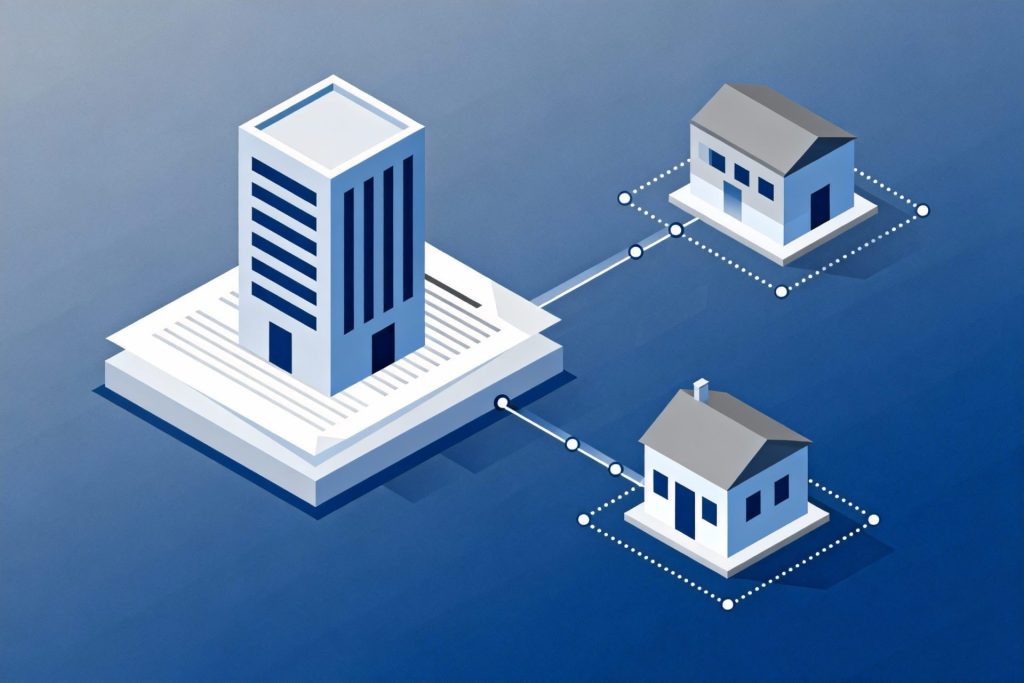
The most fundamental difference between a Chinese parent company and its branch lies in their legal status. A parent company in China is a separate legal entity with independent juridical personality, capable of entering contracts, owning assets, and assuming legal obligations in its own name. In contrast, a branch office lacks independent legal status and exists merely as an extension of its parent company.
As explained by Azets, a leading financial advisory firm, “A branch office is not a legal entity but an extension of its principal (a foreign company) even if the branch office has its own company registration number.” This means all legal actions taken by a branch are technically actions of the parent company, with no separate legal identity recognized by Chinese law.
Liability and Risk Exposure
Liability structure represents another critical distinction between parent companies and branches in China. A parent company, as a separate legal entity, generally limits its liability to the assets it owns, protecting shareholders’ personal assets from business debts and legal claims. However, when it comes to branches, this liability protection does not exist.
The parent company bears full legal responsibility for all debts, obligations, and legal disputes arising from branch operations. This unlimited liability exposure makes branches a higher-risk structure compared to independent subsidiaries. In China’s complex regulatory environment, this can create significant risks for parent companies with multiple branch operations across different regions.
Management Structure and Decision-Making
Parent companies in China typically maintain a centralized management structure with a board of directors and executive team responsible for strategic decision-making. In contrast, branches operate under the direct control and supervision of the parent company, with limited autonomy in day-to-day operations.
Chinese corporate law requires parent companies to maintain oversight of branch activities, ensuring compliance with both company policies and local regulations. This centralized control is particularly evident in financial management, where branches rarely have authority to make independent investment decisions or enter into major contracts without parent company approval.
Financial and Taxation Differences
Financial independence represents a key operational difference between parent companies and branches in China. Parent companies maintain their own financial accounts, generate independent revenue streams, and are responsible for their own profit and loss statements. Branches, however, do not have independent financial standing.
As noted in a ScienceDirect research article on Chinese corporate structures, typical Chinese companies have “a mixed ownership structure with three predominant groups of shareholders—the state, legal persons (institutions), and individuals.” This ownership structure directly impacts financial decision-making and resource allocation to branches.
From a taxation perspective, branches are not taxed as independent entities but rather their profits and losses are consolidated with those of the parent company. This can create both advantages and disadvantages depending on the overall financial performance of the parent company and applicable tax regulations.
Registration and Regulatory Requirements
Establishing a branch in China involves a different registration process compared to forming a new parent company. While parent companies must complete full company registration with the State Administration for Market Regulation (SAMR), branches undergo a simpler registration process as extensions of existing entities.
Branches must register with local authorities and obtain a business license, but they are not required to have independent registered capital—a requirement that applies to parent companies. This lower barrier to entry makes branches an attractive option for companies seeking to establish a presence in multiple Chinese cities without the full administrative burden of creating new legal entities.
Operational Considerations for Business Expansion
When deciding between establishing a parent company or branch in China, businesses must carefully evaluate their strategic goals, risk tolerance, and operational needs. Branches offer simplicity in management and reduced administrative requirements but expose the parent company to unlimited liability.
As highlighted by Deel in their comparison of business structures, “The key difference between subsidiaries and branch offices is that branches are an extension of your parent company, whereas subsidiaries are separate.” While this comparison focuses on subsidiaries rather than parent companies, it underscores the dependent nature of branches in relation to their parent entities.
For foreign companies entering the Chinese market, understanding these structural differences is particularly important, as China’s legal system treats foreign-invested enterprises differently from domestic companies. Proper structuring can impact everything from tax liabilities to market access and operational flexibility.
Conclusion
The differences between a Chinese company’s branch and parent company are profound and multifaceted, affecting legal status, liability, management, finance, and regulatory compliance. While parent companies enjoy independent legal status and limited liability protection, branches operate as extensions with minimal autonomy and expose the parent entity to greater risk.
Businesses operating in China must carefully consider these differences when developing their corporate structure and expansion strategies. Whether establishing a new parent company or expanding through branches, understanding the legal and operational implications is essential for long-term success in China’s dynamic business environment.
