

Entering the Chinese market offers unparalleled growth opportunities for foreign brands, especially as China’s foreign trade hits a historic milestone, with total imports and exports surpassing 25 trillion RMB for the first time in a single half-year. This explosive expansion of China’s foreign trade proves that the country is not just a global factory, but a premier consumption giant where foreign brands must cultivate deep consumer loyalty. However, establishing this loyalty comes with unique intellectual property risks, particularly regarding trademark protection. Unlike many Western jurisdictions that follow a first-to-use trademark system, China operates on a strict first-to-file principle. This means the first party to register a trademark holds exclusive legal rights, regardless of prior use. To capture this booming market safely, the single most critical, yet frequently overlooked, step is securing a professional brand Chinese translation during the China trademark registration process. Failing to sync your original brand with its Chinese equivalent leaves you highly vulnerable to costly legal disputes, trademark squatting, and permanent brand damage. In this new era of global commerce, brand Chinese translation in China trademark registration is no longer just a creative marketing option—it is the ultimate legal gateway to safeguarding your share of China’s foreign trade.
Why Chinese Translated Trademarks Are Non-Negotiable for China Market Entry
Brand Chinese translation in China trademark registration is not just a marketing consideration—it is a core legal requirement for full IP protection. Most Chinese consumers rely on Chinese characters to identify and recall brands, so your English-only trademark will have limited recognition and legal protection in the market. Even if you hold a valid international trademark for your English brand name, it does not extend to China under the principle of territoriality. Why Your Company’s English Name TM Registration Isn’t Enough: The Ultimate Guide to Chinese Translated Company Name further explains that foreign brands that only register their English trademark leave 90% of their brand identity unprotected in China, making them easy targets for trademark squatters who register Chinese translations of well-known foreign brands to resell them at exorbitant prices or profit from brand confusion.
The high stakes of this oversight are reflected in industry data: the EU SME Centre reports that 18% of foreign trademark applicants face higher rejection rates from the China National Intellectual Property Administration (CNIPA) when they fail to submit properly vetted Chinese translations of their marks. Source: EU SME Centre China. Without a registered Chinese translation, you also cannot take legal action against third parties using similar translated marks to sell counterfeit or competing products, even if consumers clearly associate the translation with your brand.
Understanding the two core translation methods for Chinese trademarks will help you choose a mark that balances legal validity, cultural relevance, and brand alignment.
Core Translation Methods for Chinese Trademarks: Transliteration vs. Free Translation
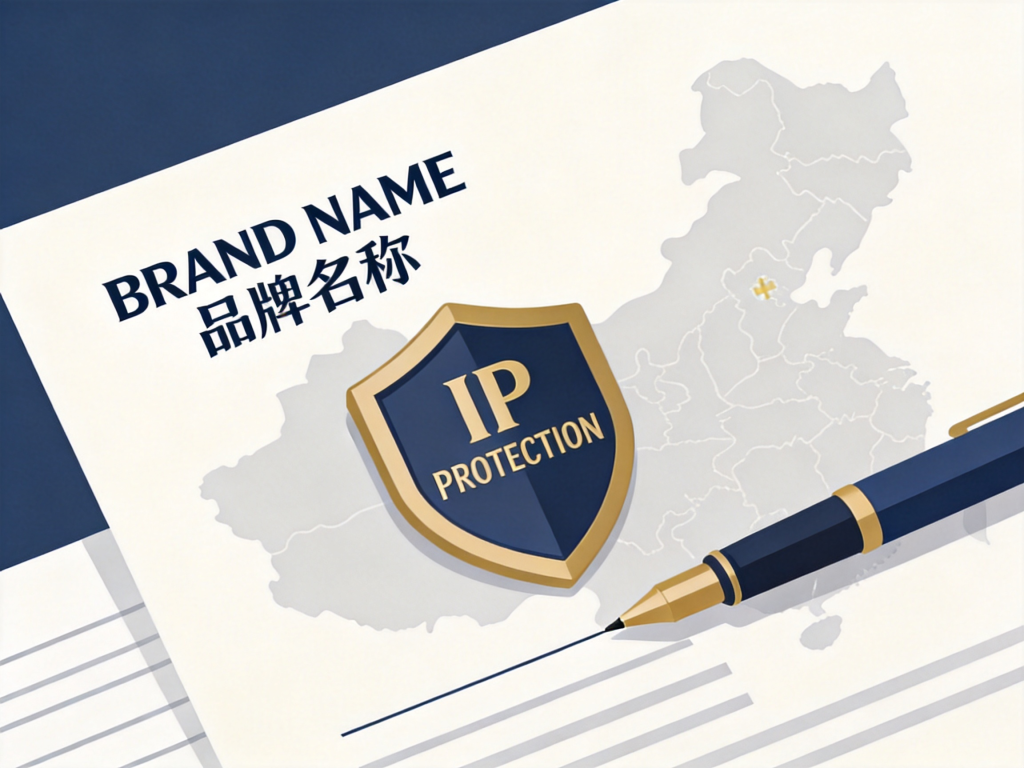
When translating your brand name for China trademark registration, there are two primary approaches, each with its own advantages and use cases: transliteration, which matches the sound of your English brand name using Chinese characters, and free translation, which conveys the meaning or core value of your brand in Chinese. Many top-performing foreign brands combine both approaches to create a translation that sounds similar to the original name while carrying positive cultural connotations.
Some of the most successful Chinese trademark translations in history include:
- Coca-Cola → Kekou Kele: The translation combines transliteration with positive meaning, literally translating to “delicious and fun,” which has become one of the most recognizable brand names in China. Early attempts to translate the name as “Kedou Kenla” (tadpole biting wax) resulted in near-zero sales, demonstrating the massive impact of translation quality on brand performance.
- IKEA → Yijia: A combination of transliteration and free translation, meaning “suitable for home,” perfectly aligns with the brand’s home furnishing value proposition and draws on positive cultural references from classic Chinese poetry.
- BMW → Baoma: Translates to “precious horse,” evoking associations with speed, luxury, and reliability that resonate strongly with Chinese auto consumers, far outperforming more literal translations of the brand’s full German name.
When working with a licensed agent such as GWBMA to translate your brand, it is critical to prioritize both legal compliance and cultural suitability early in the process, especially for your official company name translation as well as your product brand marks. Avoid generic machine translations, as they often carry unintended negative meanings or fail to meet CNIPA’s registration requirements. How Foreign Applicants Can Avoid Trademark Rejection in China: Abusive Words Blocked by CNIPA outlines common translation-related mistakes that lead to application rejection, including the use of characters with vulgar or misleading meanings.
Next, reviewing landmark legal cases will highlight the real-world costs of failing to register a properly translated Chinese trademark.
Landmark Legal Cases Highlighting Chinese Translation-Related Trademark Risks
Multiple high-profile legal disputes over the past two decades have underscored the importance of securing your translated Chinese trademark as early as possible, even for globally recognized brands.
The Michael Jordan Qiaodan Case
One of the most famous examples of translation-related trademark conflict is the long-running dispute between NBA legend Michael Jordan and Chinese sportswear brand Qiaodan Sports. Qiaodan is the common Chinese transliteration of “Jordan,” and the company registered the mark in 2003, along with related logos and graphics that evoked Michael Jordan’s public image. Despite multiple lawsuits from Jordan’s legal team, Chinese courts ruled in favor of Qiaodan Sports, citing China’s first-to-file principle and the lack of formal protection for foreign celebrity names under Chinese trademark law unless they are registered as trademarks. While public perception widely associated the Qiaodan brand with Michael Jordan, the lack of a registered Chinese translation meant Jordan had no legal recourse to stop the company from using the mark. The case cost Jordan millions in legal fees and lost licensing revenue in the Chinese market, all of which could have been avoided with an early Chinese trademark registration.
The Castel / Kasite Case
French wine producer Castel Group entered the Chinese market in 1999 and began using the transliteration “Kasite” to promote its products, but failed to register the mark as a trademark. A Chinese business owner registered the Kasite mark in 2000, and later sued Castel for trademark infringement. The 10-year legal battle ended with Castel being ordered to pay RMB 500,000 in damages and forced to rebrand its Chinese operations under the new name “Kasidaile”, erasing decades of brand recognition in the market. Source: China Daily
The Corona / Keluona Case
In a 2020 ruling, the Zhejiang High Court ruled that an importer that used the translation “Kaluona” for parallel imported Corona beer had infringed on AB InBev’s registered Chinese trademark “Keluona”. The court held that even if the imported products were genuine, using an unapproved translation that conflicted with the registered Chinese mark damaged the brand’s source recognition function and constituted infringement, even though the English Corona mark appeared on the product packaging. Source: Jiangxi Provincial Higher People’s Court
With these risks in mind, following structured best practices will help you secure your translated Chinese trademark without unnecessary delays or disputes.
Step-by-Step Best Practices to Secure Your Chinese Translated Trademark
To ensure full legal protection for your brand in China, follow these proven steps when handling your Chinese translation and trademark registration:
- Register your Chinese translation at the same time as your English trademark: Do not wait until you launch operations in China to file for your Chinese mark. Trademark squatters regularly monitor international brand announcements and register translations of new brands months before they enter the Chinese market. Consider registering 2-3 alternative translations to cover common transliterations and block squatters from registering similar marks.
- Work with a qualified local trademark agent: When selecting an agent such as GWBMA, confirm they have proven experience in both trademark translation and CNIPA registration procedures. Local agents understand cultural nuances, CNIPA’s examination standards, and can conduct comprehensive prior trademark searches to ensure your proposed translation is not already registered.
- Register translations for both your brand name and company name: Many foreign brands overlook registering translations of their official company name, leaving them vulnerable to squatters who register the translation as a business name to create consumer confusion. Register both product trademarks and company name trademarks across all relevant classes of goods and services you offer or plan to offer in the future.
- Test your translation with local consumers and legal teams: Before filing, conduct market research to confirm your translation has positive connotations, is easy to remember, and is not associated with competing brands or negative concepts. Your legal team should also confirm that the mark does not violate any CNIPA registration prohibitions, such as the use of geographic terms or deceptive language.
- Monitor for infringements and squatting regularly: After registration, set up regular monitoring of CNIPA’s trademark announcement bulletins to identify any applications for similar translated marks. You have a 3-month window to file an opposition against conflicting applications before they are approved. How to Register a Trademark in China: The Detailed Process for Applying TM provides a full breakdown of the registration and monitoring process.
Beyond legal protection, a well-crafted Chinese translated trademark also delivers significant marketing and growth benefits for your brand.
How Proper Translation Drives Both Legal Protection and Brand Growth
A high-quality Chinese translated trademark delivers dual value: it creates a strong legal barrier against infringement and squatting, while also serving as a powerful marketing asset that drives consumer recognition and loyalty. Brands that invest in culturally relevant, legally protected translations see 30% higher brand recall among Chinese consumers compared to brands that only use English marks, according to a 2023 survey of 5,000 Chinese consumers by the China Brand Research Institute.
For example, Swedish furniture brand IKEA’s “Yijia” translation has become so closely associated with affordable, stylish home goods that it is often used as a generic term for flat-pack furniture in Chinese social media content. Similarly, Nike’s “Naike” translation, meaning “endurance and victory,” has helped the brand build a strong connection with Chinese sports consumers and outperform competing international sportswear brands for decades.
Even if you face an existing squatting issue with your brand’s translation, you still have options: you can file a cancellation action against the squatted mark if you can prove your brand is well-known in China, or adopt an alternative translation that is still aligned with your brand identity, as many brands, including Castel and New Balance, have done successfully.
Conclusion:
In conclusion, brand Chinese translation in China trademark registration is the foundation of all intellectual property protection and market success for foreign brands operating in China. China’s first-to-file system, territoriality principle, and consumer reliance on Chinese character marks mean that an English-only trademark provides almost no meaningful protection in the market. High-profile cases such as the Michael Jordan Qiaodan dispute and the Castel wine case demonstrate that even globally recognized brands face massive losses when they fail to register their Chinese translations early. By working with qualified agents such as GWBMA to select a culturally appropriate, legally available translation, registering it alongside your English mark, and monitoring for infringements, you can secure full protection for your brand and unlock long-term growth in the world’s largest consumer market.
