


As the world’s second-largest economy, China offers immense opportunities for creators and businesses to monetize their works. However, protecting your intellectual property (IP) through Chinese work copyright application is critical to avoiding infringement and securing legal recourse. Whether you’re a freelance writer, international designer, or tech company developing software, understanding the key points of China’s copyright registration process ensures your creative assets are safeguarded. This guide covers eligibility, required documents, step-by-step procedures, benefits, and common pitfalls to streamline your Chinese Work Copyright Application.
Eligibility Criteria for Chinese Work Copyright Application
Before initiating your application, confirming your eligibility is the first critical step to avoid wasted time and resources. China’s copyright laws extend protection to both domestic and foreign creators, but eligibility varies based on your residency and the origin of your work.
| Applicant Type | Eligibility Requirements |
|---|---|
| Chinese Citizens/Entities | All works, whether published or unpublished, are automatically protected under Chinese copyright law. Registration is voluntary but recommended for legal enforcement. |
| Foreign Citizens/Entities (Work First Published in China) | Works first released in China are eligible for full copyright protection and registration, regardless of your home country’s treaties with China. |
| Foreign Citizens/Entities (Work Published Abroad) | Eligibility applies if your home country is a signatory to international treaties like the Berne Convention or has a bilateral agreement with China. |
For example, a French photographer whose country is part of the Berne Convention can register their landscape photos taken in France with the Chinese copyright authorities. Once you confirm you meet the eligibility criteria, the next step is gathering the necessary documentation to support your application.
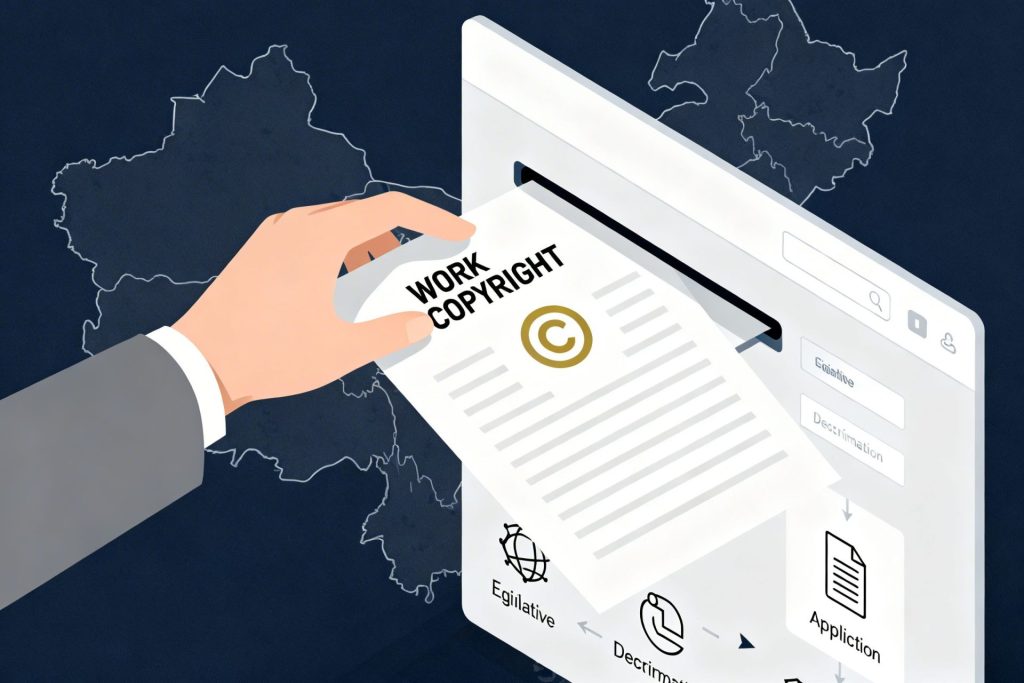
Essential Documentation for Smooth Copyright Registration
Submitting incomplete or incorrect documentation is one of the most common reasons for copyright application delays or rejections. The required materials vary slightly depending on whether you’re applying as an individual or a legal entity.
| Applicant Type | Required Documents |
|---|---|
| Individual Creator | 1. Completed copyright registration application form 2. Valid government-issued ID (passport for foreigners) 3. Work sample (digital or physical, depending on work type) 4. Rights guarantee letter (signed by the applicant) 5. Work creation description (outlining theme, process, and originality) |
| Legal Entity (Company/Organization) | 1. Completed copyright registration application form 2. Business license or entity registration certificate 3. Authorized representative ID and official letter of authorization 4. Work sample 5. Rights guarantee letter (signed by legal representative and sealed) 6. Documentation proving work ownership (e.g., employment contract for works created in the course of employment) |
A real-world example involves a Canadian tech startup that failed to include an authorization letter when applying for software copyright registration in China. This oversight resulted in a 30-day delay while they submitted the missing document. With your documentation in order, understanding the official application process will help you navigate each stage efficiently.
Step-by-Step Chinese Work Copyright Application Process
The official Chinese copyright registration process is managed by the China Copyright Protection Center (CCPC) and local copyright bureaus, with most applications now completed online for convenience.
- Submit Application Materials: Log into the China Copyright Protection Center official portal to fill out the application form and upload required documents and work samples.
- Application Review & Confirmation: The registration authority will review your submission within 3-5 business days and notify you of any missing materials or corrections needed.
- Pay Registration Fees: Once your application is accepted, you’ll receive a payment notification. Fees vary by work type. Payment can be made online or via bank transfer.
- Formal Examination & Processing: The authority will conduct a formal examination of your application, which typically takes 25 business days. If additional information is needed, you’ll receive a correction notice and have 30 days to respond.
- Receive Registration Certificate: Approved applications will receive a digital or physical copyright registration certificate, which is publicly available on the CCPCC website.

Understanding the timeline and each step’s requirements ensures you stay on track and avoid unnecessary delays. Beyond completing the application, recognizing the long-term benefits of registered copyright is key to leveraging your intellectual property effectively.
Legal Protections and Benefits of Registered Chinese Copyright
While Chinese copyright law automatically protects original works upon creation, voluntary registration offers significant legal and practical benefits for creators and businesses.
First, a copyright registration certificate serves as prima facie evidence of ownership in legal disputes. In 2024, over 90% of copyright infringement cases in Chinese courts relied on registration certificates as key evidence, according to the Supreme People’s Court of China. Second, registered copyright simplifies the process of licensing, transferring, or monetizing your work, as it provides clear proof of ownership to potential partners or buyers.
Additionally, registered copyright holders are entitled to both moral rights (e.g., right of attribution, right to protect the integrity of the work) and economic rights (e.g., right of reproduction, right of distribution, right of adaptation). Moral rights are perpetual, while economic rights typically last for the life of the author plus 50 years after their death.
For foreign creators, registration also ensures your work is protected under international treaties that China has ratified, such as the TRIPS Agreement. With these benefits in mind, avoiding common mistakes during the application process is crucial to securing these protections.
Common Mistakes to Avoid in Chinese Work Copyright Application
Even with careful preparation, small errors can derail your copyright application. Being aware of these common pitfalls will help you submit a flawless application.
- Incorrect Work Classification: Misclassifying your work (e.g., labeling a photography work as a literary work) can lead to rejection. Ensure you select the correct category from the CCPCC’s official list, which includes 16 types of works such as literary, musical, and architectural works.
- Inconsistent Information: Discrepancies between your application form, ID, and supporting documents (e.g., different spellings of your name) will trigger a request for corrections. Double-check all information for consistency before submission.
- Insufficient Work Samples: Submitting incomplete or low-quality work samples may result in the authority questioning your work’s originality. For visual works, submit high-resolution images; for literary works, include the full text or a detailed excerpt.
- Ignoring Post-Submission Notices: If you receive a correction notice, failing to respond within the 30-day deadline will result in your application being withdrawn. Set reminders to check your email or the CCPCC portal regularly.
For instance, a Japanese graphic designer once had their application rejected because they submitted a low-resolution thumbnail of their artwork instead of a high-quality sample. Correcting this mistake required resubmitting the sample, which extended their processing time by 10 business days. By avoiding these errors, you can ensure your application moves forward smoothly.
Conclusion:
Navigating the Chinese work copyright application doesn’t have to be overwhelming when you understand the key eligibility criteria, documentation requirements, official process, benefits, and common pitfalls. Whether you’re a local creator or an international artist looking to protect your work in China, following these guidelines will help you secure your intellectual property rights effectively. For creators also looking to distribute their work digitally, our guide on How Can I Publish Mobile Apps in China As a Foreigner? offers additional insights into protecting and monetizing digital content in the Chinese market.
